Experimental Research in Mission-Critical Voice
Mission-critical voice (MCV) communications systems are employed by most public safety organizations such as law enforcement, emergency medical services, fire, search and rescue, military, and by selected private organizations (taxi, logistics, and traffic control). A variety of environmental factors and communication system properties can impair intelligibility, i.e., the comprehensibility of transmitted speech in given conditions. This research project evaluates the impact of selected impairments (background noise, delay, communication errors) on the intelligibility of MCV communications.
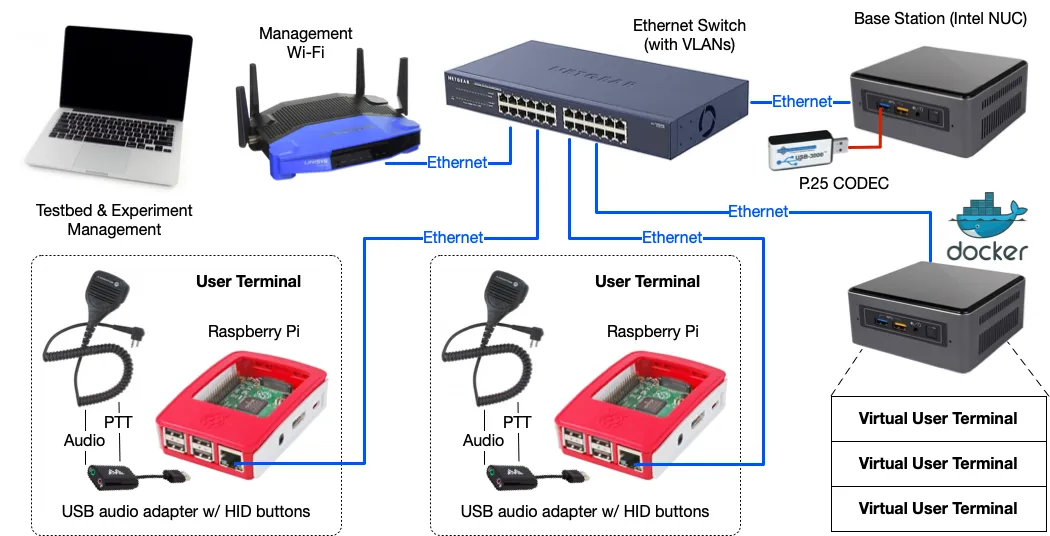
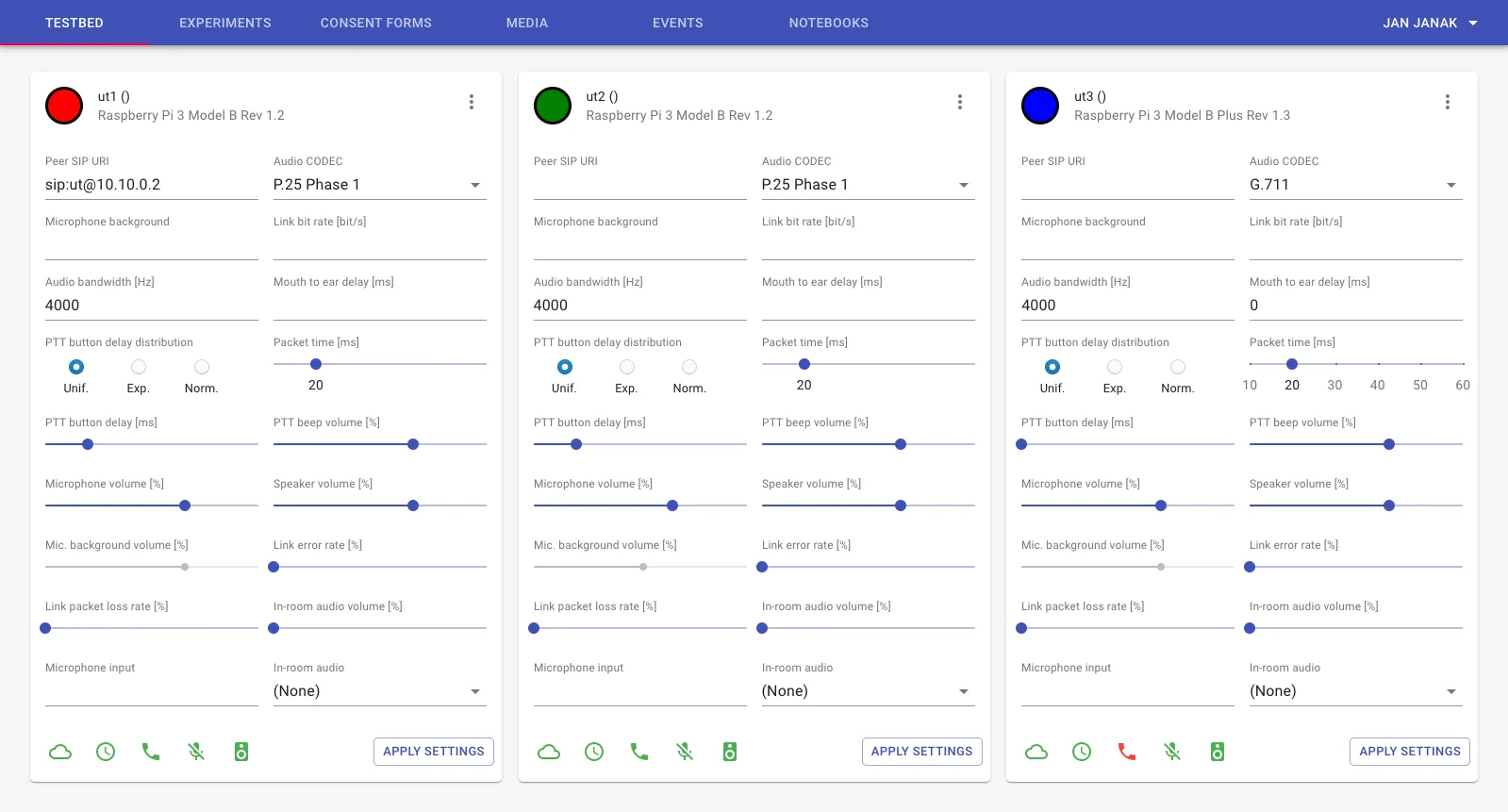
We have designed and built an experimental testbed that can emulate a variety of MCV communications systems architectures in a controlled environment (lab). The testbed can be used to emulate various push-to-talk (PTT) and full-duplex communication scenarios and comes with configuration profiles for the most commonly deployed MCV systems including analog FM and Project 25 (P.25). Key parameters that influence intelligibility such as background noise, speech codecs, PTT delay, mouth-to-ear (MtE) delay, and bit error rate are run-time configurable and applied in software.
Image Carousel with 5 slides
A carousel is a rotating set of images. Use the previous and next buttons to change the displayed slide
-
Slide 1: Testbed architecture
-
Slide 2: Testbed user interface
-
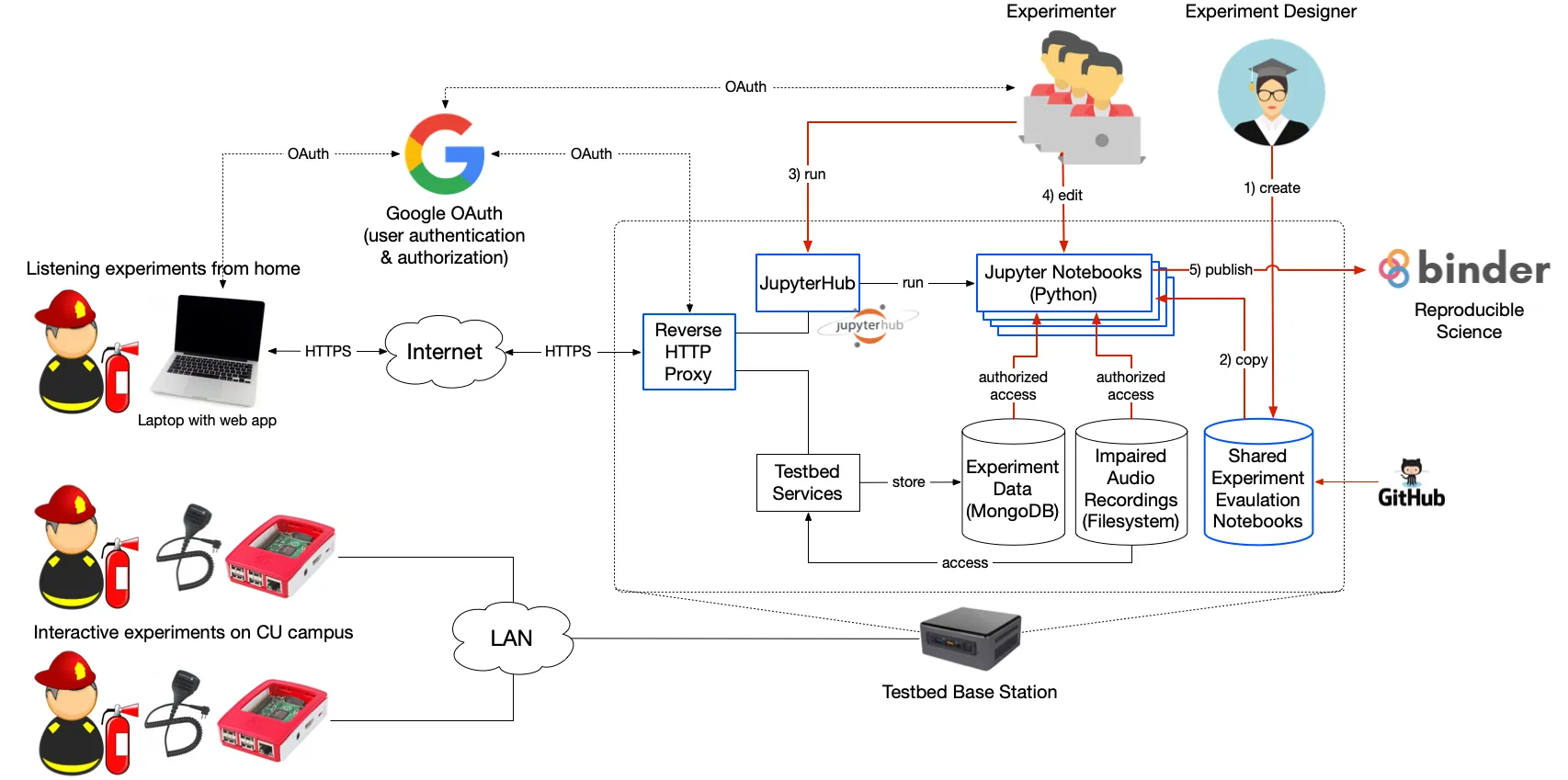
Slide 3: Integrated JupyterLab environment for experiment evaluation
-
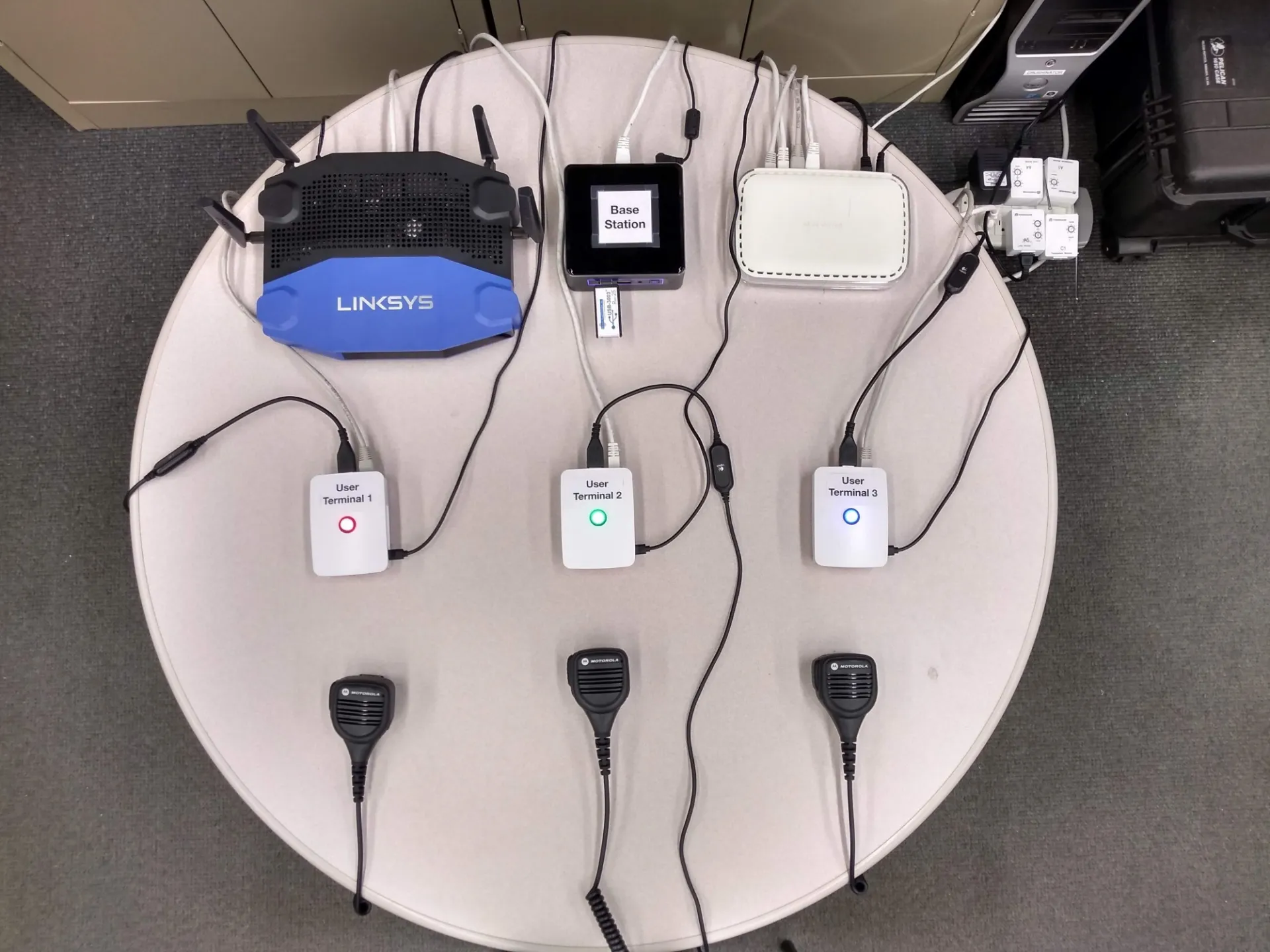
Slide 4: Testbed prototype at Columbia University
-
Slide 5: The testbed architecture during human-subject experiments.
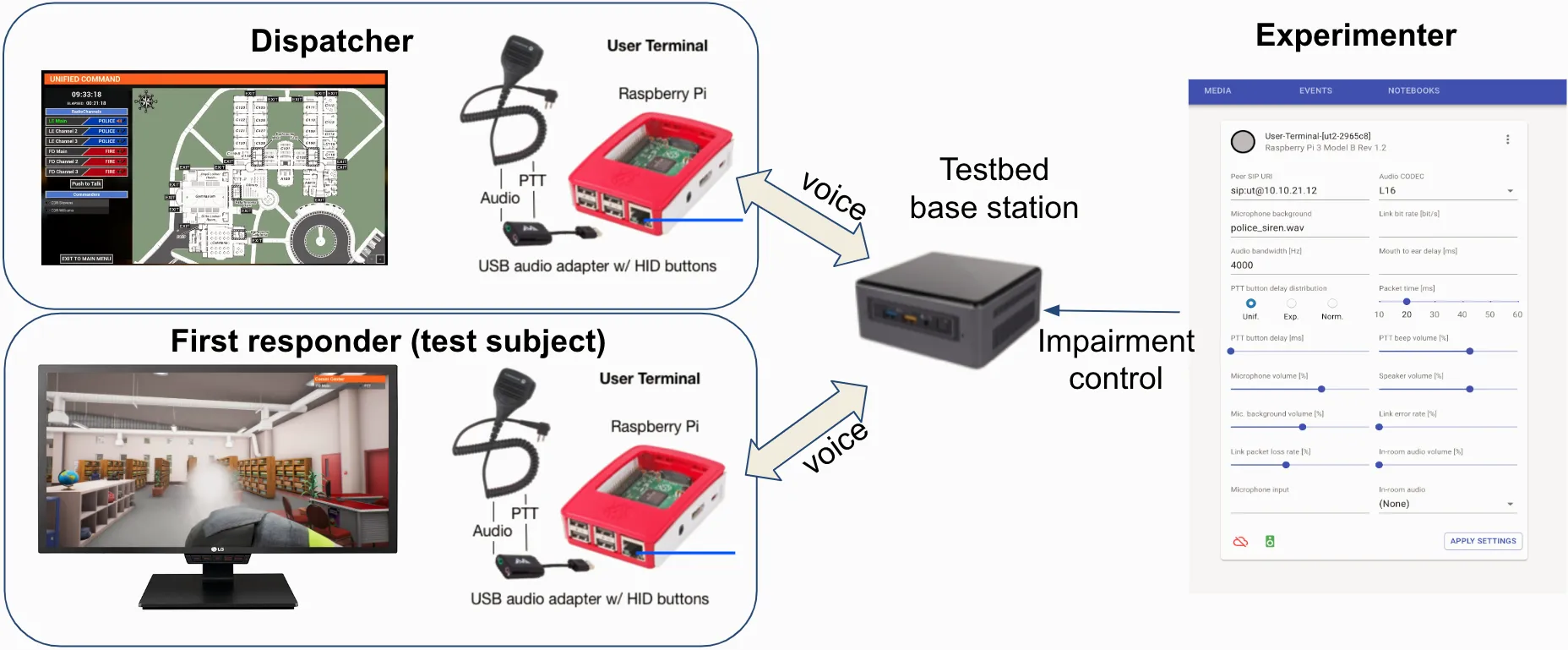
We use the testbed to conduct human-subject studies with volunteers from the first responder and Columbia University communities. In these experiments, a human-subject volunteer assumes the role of a first responder in a virtual game-like environment. Their goal is to complete a task as quickly and accurately as possible based on instructions received from a dispatcher via the testbed. The testbed is programmed to impair the communication to emulate a MCV communications system in a variety of conditions. We evaluate the effectiveness of each participant at completing the task using the data collected by the testbed during the experiment.